

Overview
- Dangerous goods warehousing in the Philippines requires strict compliance
- Understanding the 9 UN hazard classes and proper handling procedures is highly important for minimizing safety risks and avoiding costly disruptions.
- Choosing the right dangerous goods warehouse goes beyond storage capacity.
- Proper hazardous materials storage depends on hazard segregation, secondary containment, fire protection, ventilation, approved containers, and regular inspections to protect people, property, and the environment.
The Procurement Manager’s Guide to Proper Dangerous Goods Warehousing in the Philippines
One misdeclared shipment is all it takes to halt your production line.
This happens to businesses dealing with dangerous goods (DG) warehousing and transport in the Philippines every year. Such a violation can lead to long-term legal and financial crises.
To ensure regulatory compliance in this rapidly expanding market, the process must start with the safe procurement of dangerous goods.
In this article, we will discuss everything a procurement manager needs to know, including:
What are dangerous goods and their classification?
Before your team handles dangerous goods, you must first understand what they are.
According to the Federal Aviation Administration (FAA) and Republic Act No. 6969, dangerous goods, also called hazardous materials or “hazmat”, are any substance, material, or article that poses a risk to health, safety, property, or the environment when transported, stored, or handled.
Classification of Dangerous Goods in the Philippines
The United Nations (UN) has categorized dangerous goods into 9 hazard classes, with a few of them subdivided into divisions. These classes are used for hazard labels when handling and transporting DGs in the country.
See the image below for your reference.
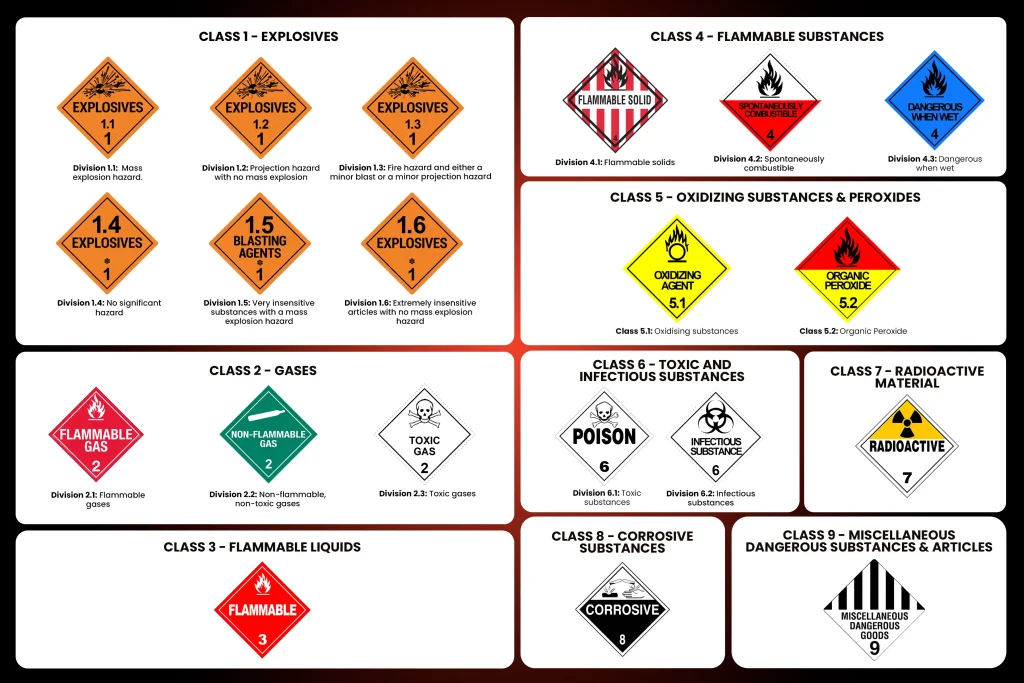
More details are in the official publication from the UN website.
The Regulatory Framework for Dangerous Goods in the Philippines
The Republic Act 6969, also known as the Toxic Substances and Hazardous and Nuclear Wastes Control Act of 1990, is the Philippine law governing the regulation and restriction of dangerous goods in the country. Any business that manages DGs in the Philippines must observe its guidelines.
If your dangerous goods move across borders, additional international regulations must be observed. Take a look at the riles of international shipments below:
IATA Dangerous Goods Regulations (DGR) for air freight
IMDG Code (International Maritime Dangerous Goods) for sea freight
Applicable road transport regulations for overland shipments
Why Compliance Matters
Failing to comply with dangerous goods regulations can lead to:
- Shipment delays
- Rejected cargo
- Operational disruptions
- Fines
- Legal liabilities
IMPORTANT NOTE: Documentation errors remain one of the most common causes of customs and logistics delays worldwide.
Step 1: Risk Assessment and Hazard Identification
Know which DGs are in your supply chain and require Safety Data Sheets (SDS) from all suppliers before placing orders.

Step 2: Personnel Training
Every employee who handles DGs must receive necessary hazmat training and regular refreshers.
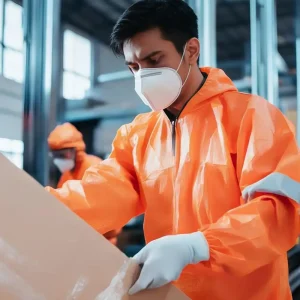
Step 3: Correct PPE Use
Determine the appropriate Personal Protective Equipment (PPE) for specific hazard classes.
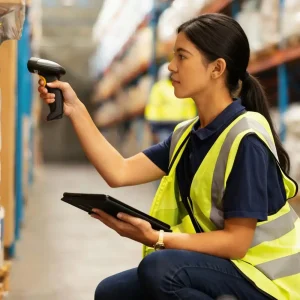
Step 4: Packaging and Labeling at Point of Receipt
Before accepting incoming DG, see if hazard labels are present and that the packaging complies with safety standards.

Step 5: Documentation Chain
All documentation should meet regulatory requirements.
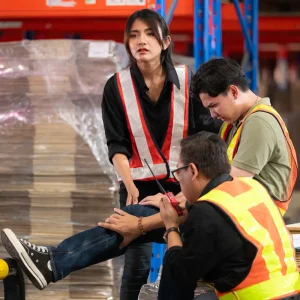
Step 6: Emergency Preparedness
Response plans for DG-related emergencies must be documented and practiced.
Dangerous Goods Storage Requirements: Dos and Don’ts
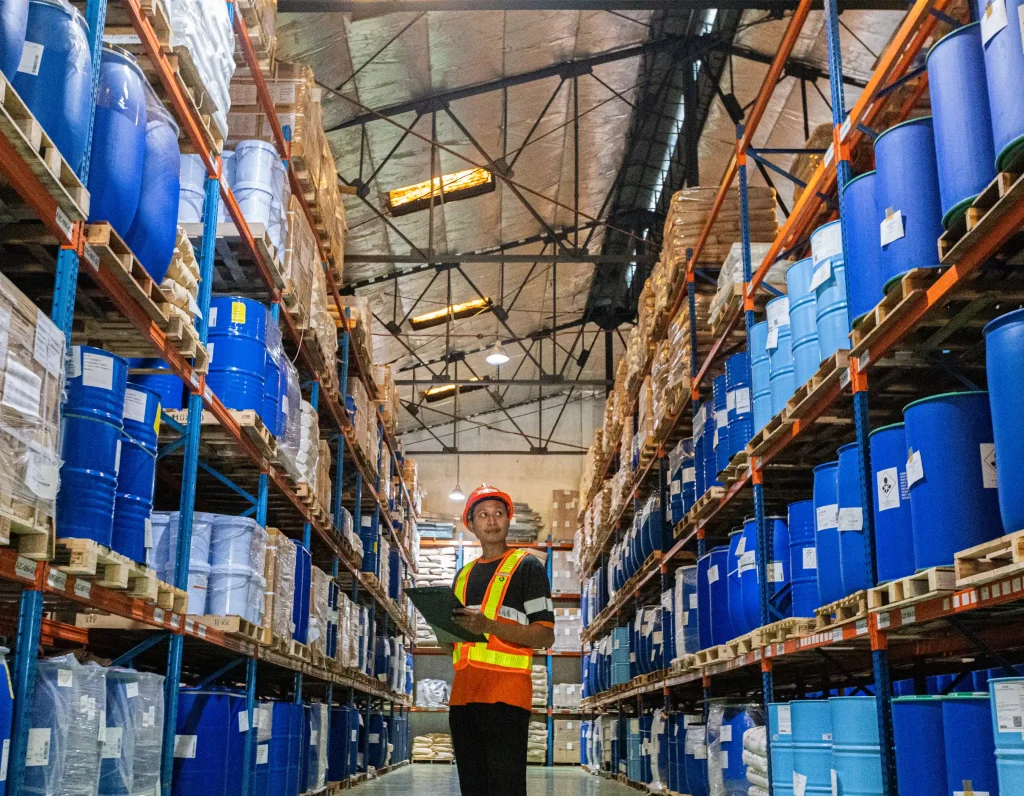
Safely storing hazardous materials requires knowing the compatible environment for their hazard classification. For this, it is good to rely on your SDS for information on proper storage and consider the dos and don’ts below:
| DO | DON’T |
|---|---|
✓ Enforce hazard segregation rules Never store incompatible materials together. | ✕ Mix incompatible materials to save space Strictly follow segregation rules, even under space pressure. |
✓ Implement secondary containment systems Use spill trays, containment pallets, or berms. | ✕ Neglect secondary containment maintenance Conduct regular inspections of the containment system. |
✓ Maintain accurate inventory records Track lot codes, expiration dates, and regulatory data by hazard class. | ✕ Store DG near ignition sources or direct sunlight Temperature control is essential to prevent DG incidents. |
✓ Ensure proper ventilation and fire suppression Required when storing flammable and volatile DGs. | ✕ Outsource DG storage without checking the facility Your local logistics partner should meet applicable storage standards. |
✓ Label all storage areas correctly Maintain inventory integrity and safe handling. | ✕ Leave storage areas unmarked or mislabeled Unclear labeling leads to mishandling and compliance gaps. |
✓ Use only approved containers Require specialized containers suitable for your DG. | ✕ Repurpose generic or unrated containers Non-approved containers compromise containment integrity. |
What to Look For and How to Evaluate Your 3PL Partner for Hazardous Materials
Take note of these questions when evaluating the services and compliance of your prospective 3PL partner:
- Can they provide regulatory compliance documentation without hesitation?
- Is their facility’s infrastructure aligned with the environmental conditions your DGs demand?
- Can they show competency assessment records of their warehouse personnel?
- Aside from warehousing, do they offer value-added services?
- Does their liability coverage include DG incidents?
- Can they provide real-time inventory tracking, lot visibility, and expiry date monitoring?
- How long have they operated DG facilities, and do they have references to show for it?
In addition to these questions, you can also explore the checklist below that can serve as a quick guide when selecting a warehouse for your dangerous goods.
- Confirm that their work permits and management plans are current.
- Inspect for hazard segregation systems and secondary containment.
- Verify the capabilities of their Warehouse Management System (WMS).
- Request training certifications for all DG-handling warehouse staff.
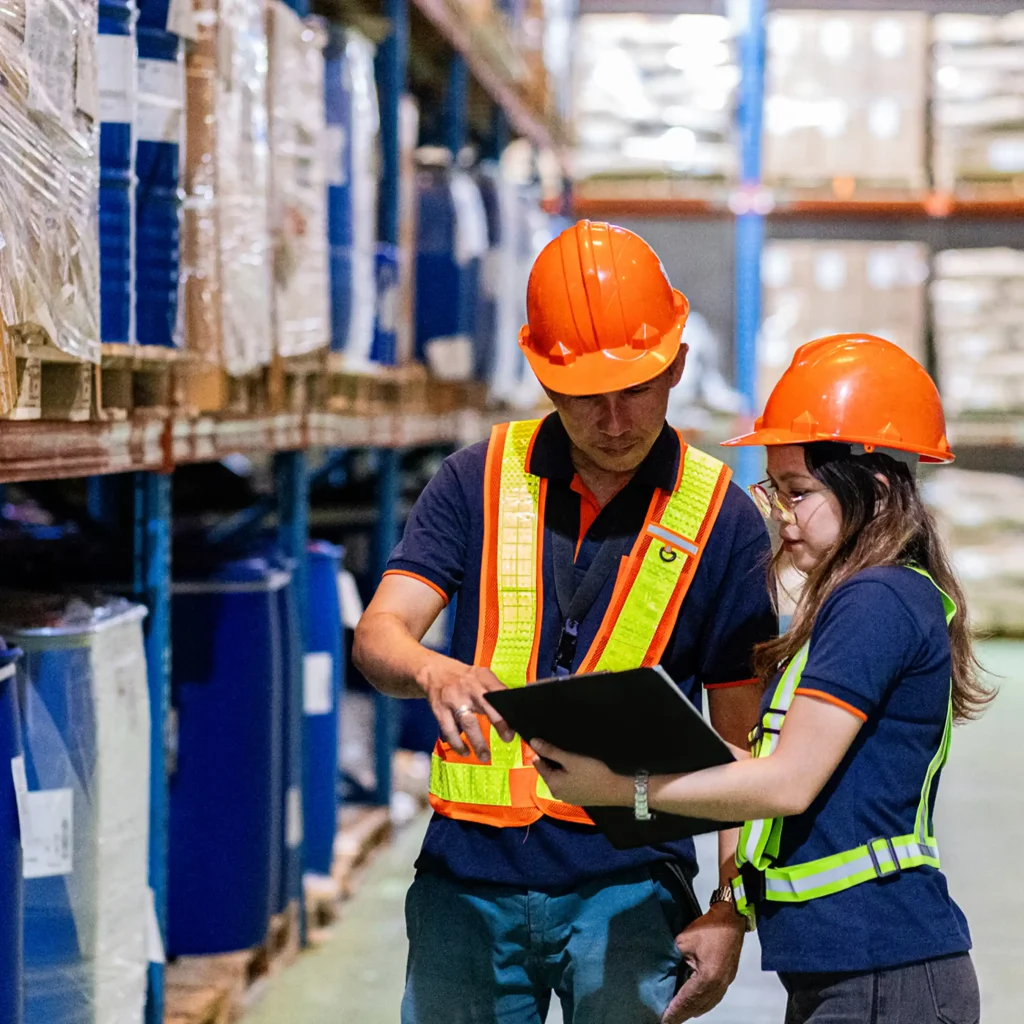
Toplis Logistics has facilities built and managed for compliant warehousing of multiple DG classes
We’d welcome the opportunity to walk you through our facilities.
Conclusion
Sourcing and handling dangerous goods is a complex task. It requires specialized practices that adhere to strict regulations, and the cost of non-compliance is not something any procurement team can afford to risk.
In response to this, the smartest move for some businesses is to rely on a 3PL partner that can give their supply chain the support it needs to operate safely, efficiently, and cost-effectively.
At Toplis Logistics, we offer exactly that. We’ve delivered customized solutions as a trusted logistics partner across the Philippines to industries that simply cannot afford operational failure.
Let’s help you build a compliant and efficient DG management.
Frequently Asked Questions About Dangerous Goods Handling and Storage
Required documents typically include a Dangerous Goods Declaration (DGD), a Safety Data Sheet (SDS), mode-specific transport documents, and driver or handler emergency instructions for road transport.
Generally, no. DGs must be stored in specialized facilities that are compatible with their hazard class.
Yes. Lithium batteries fall under Class 9 DG.
