

Overview
- Dangerous goods are regulated under international hazard classifications, while dirty goods (such as tires, oils, lubricants, and wires) may not be classified as hazardous but still require specialized storage and handling.
- Poor handling increases the risk of workplace accidents, industrial fires, environmental damage, regulatory penalties, inventory loss, and business disruptions.
- An industry-standard dry warehouse minimizes risk and improves efficiency. Features such as segregated storage zones, engineered ventilation, fire safety systems, real-time inventory tracking, and proper documentation help ensure compliance and protect valuable inventory.
- Dangerous goods require compliance with Republic Act No. 6969 and safety measures like segregation, ventilation, spill containment, and fire protection, while dirty goods need storage systems that prevent contamination, degradation, and fire risks.
Dangerous Goods vs. Dirty Goods: What’s the Difference and How to Properly Store Them in a Dry Warehouse
Tires and lithium batteries. Both of these items pose hazards when stored in a dry warehouse. But does this mean you can label both as “dangerous goods”?
Here’s the thing. Not everything that needs careful storage is technically “dangerous.”
Storage Classification: Tire vs Lithium Battery
Tire
Lithium Battery
When you manage supply chain operations or procurement for a business, some of the products you move are classified as a hazard under international rules. On the other hand, some of it isn’t hazardous on paper but still requires specialized handling because of its physical dimensions and attributes or how it quietly adds fire load if it’s racked the wrong way.
Knowing the difference between dangerous goods and dirty goods is the first step to storing both safely. Let’s break it down.
What Counts as “Dangerous” Goods, Exactly?
Dangerous goods are substances or articles that can harm health, safety, property, or the environment when they’re transported, stored, or handled.
Internationally, dangerous goods fall into nine hazard classes that are used for labeling and documentation:
Dangerous Goods Reference
Hazard classes, at a glance
Nine classes, nine storage rules. Tap any card to flip it and see how each one needs to be handled in the warehouse.
Tap a card to flipThese classifications exist for one simple reason: so when a warehouse worker in Cebu and a trucker heading to Bulacan read the same hazard label in a safety data sheet, they interpret it the same way.
In other words, it provides a quick visual warning to those responsible for handling dangerous goods. This also makes it easier for emergency responders to recognize the type of hazard that they are dealing with.
Learn more about proper warehousing of dangerous goods from our previous blog post:
So What Are “Dirty” Goods, Then?
This is where some operations managers get confused. Dirty or industrial goods usually don’t fall under the nine classes above. Examples include tires, cable wires, used oil, industrial lubricants, and chemical additives. But just because they are not dangerous goods doesn’t mean you can toss them anywhere.
Dirty goods still need a dedicated storage facility. This is to preserve and protect them from cases such as product degradation or warping.
It is also best to have a warehouse team who understand proper handling and segregation of dirty goods to avoid the potential risk of contamination or accidents.
Let’s delve into the common practices and requirements for storing dangerous goods and dirty goods.
What Are the Dangerous Goods Storage Requirements in the Philippines?
Locally, hazardous storage is regulated by Republic Act No. 6969, the Toxic Substances and Hazardous and Nuclear Waste Control Act.
In practice, being compliant with this law comes down to four things:
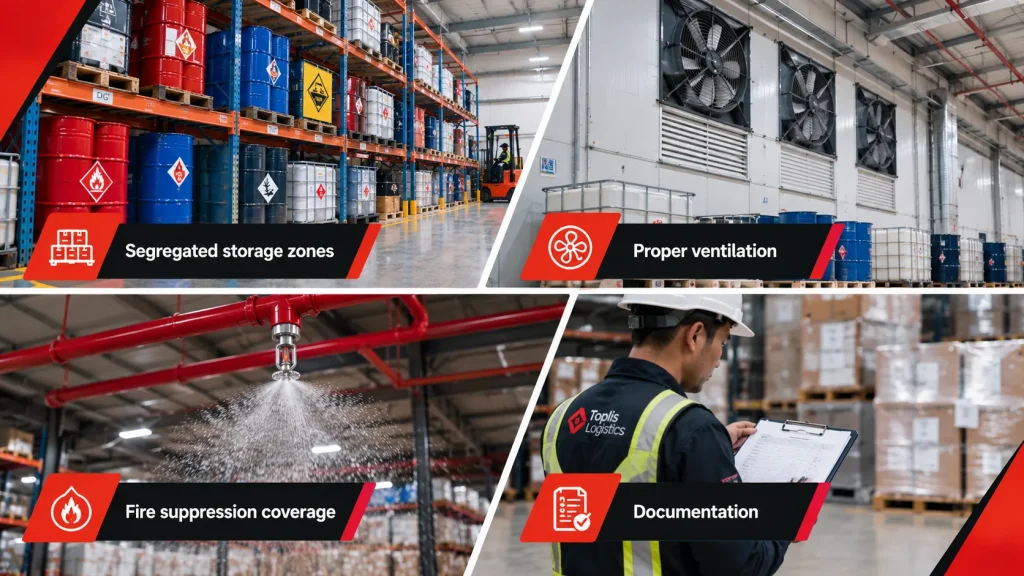
- Segregated storage zones based on hazard class
- Proper ventilation and spill containment
- Fire suppression coverage across the facility
- Documentation that tracks every shipment from intake to release
By committing to these four standard requirements, you can keep your warehouse staff, your transport crews, and the community around your facility safe.
How Should Dirty Goods Be Stored?
Dirty goods come in many shapes, sizes, and risk levels, so each item needs its own place and requires dedicated goods handling. It is also important to have a storage system that accounts for how these products behave over time due to their material.
Let’s give you some examples.
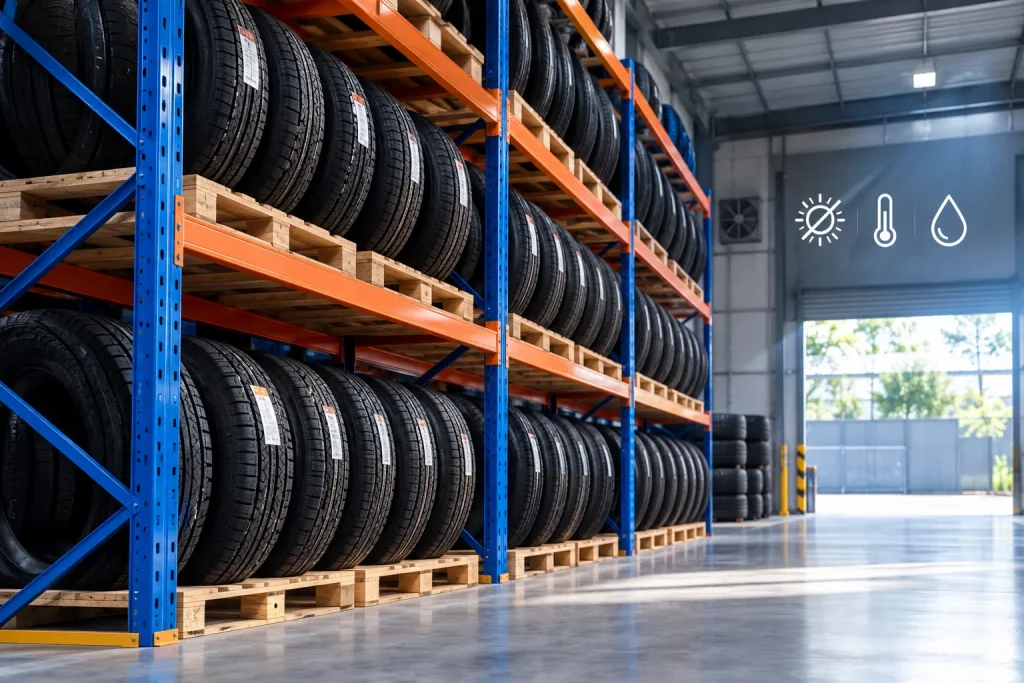
Tires
- To preserve the shape of your tires, make sure they sit upright on pallet racks.
- For long-term storage, do not stack them horizontally.
- Rubber degrades not just from use, but also from UV light, ozone, heat, and humidity. So place them in a cool, dry, shaded space.
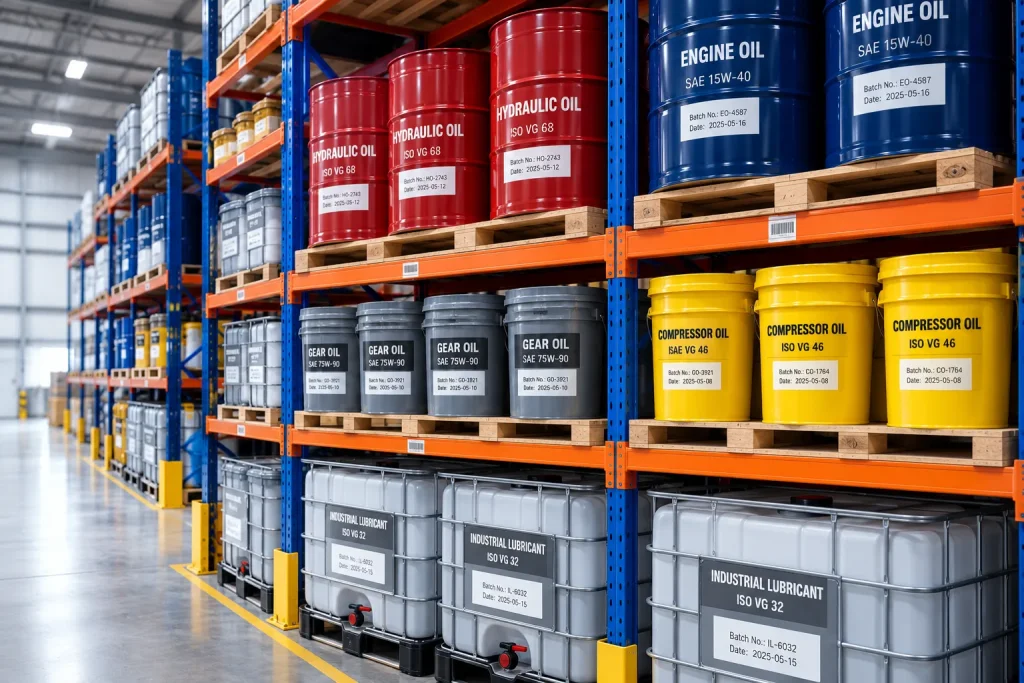
Oils and Lubricants
- These belong on racking rated for heavy, viscous loads and must be categorized by type to avoid cross-contamination.
- Observe proper labeling of product name and batch number for every container to ensure nothing gets mixed up.
Why Having Proper Goods Storage Is Not Just “Nice to Have”
You probably understand by now that properly storing dangerous and industrial goods is not optional. It is a must.
When you neglect it, serious hazards arise. Leaked or spilled chemicals can hurt your workers. It can also harm nearby communities and pollute the environment.
Improper storage could also start industrial fires. And this is a real risk that has been happening.
According to the recent report of Bureau of Fire Protection, industrial and storage facilities were among the recurring locations involved in large fire incidents reported in CALABARZON during 2025.
Proper handling and storage keep these risks low. It means using the right containers, separating goods that should not mix, and following clear safety rules set by Philippine law. When we thoroughly implement these regulations, we protect our workers and our clients’ goods. and the public.
Aside from risk reduction, good storage also saves businesses time and profit that would’ve been lost due to damaged items. Warehouse accidents can also lead to long-term financial strain from court-ordered fines, lawsuits, or plant shutdowns.
Having a trusted warehouse partner helps you avoid these costly problems and meet compliance without worries.
What an Industry-Standard Dry Warehouse Looks Like
When these elements work together, the result is an efficient space that keeps products safe for faster order fulfillment while maintaining accurate inventory records.
How Toplis Logistics Builds This Into Dry Storage
This is exactly the standard behind Toplis Logistics’ dry storage services. We believe that smart storage begins with smart planning. With operations and warehouse designs built around Republic Act 6969 from day one, we create a space that is ready to store a wide range of specialized goods.

Whether you need a secure place for a single hazardous shipment or ongoing storage for tires and lubricants, our goal is the same: a dry storage facility that’s compliant and prevents an irreversible incident from happening inside its walls.
At Toplis Logistics, safety is not our only priority. We maintain inventory accuracy and monitoring with 24/7 security and real-time inventory visibility. Our handling protocols also align with international transport documentation standards on top of our local laws, so our clients do not have to worry about the nitty-gritty of warehousing.

Conclusion
Dangerous goods and dirty goods are not interchangeable, but both lead to risks you can avoid. One is regulated by international hazard class; the other is by fire load, contamination risk, and plain operational discipline. Either way, “we’ll figure it out later” isn’t an ideal storage strategy for these products.
If your supply chain handles chemicals, tires, oils, or industrial lubricants, it’s worth checking whether your current storage setup is suitable for what you store.
Toplis Logistics’ dry storage is built around compliance from the ground up, so a hazmat pallet never ends up in the wrong zone.
Frequently Asked Questions About Storing Dangerous Goods and Dirty Goods
It gives warehouse staff, drivers, and emergency responders a shared system for spotting risk at a glance, keeping handling consistent from storage through final delivery.
Both, ideally. A well-built hazardous materials warehouse should be able to handle a single shipment just as reliably as an ongoing storage contract.
